Claude Design is Anthropic's new conversational design product, and its launch on April 17, 2026 triggered one of the sharpest single-day drops in Figma's stock history—down as much as 7.28% to close at $18.84 (OfficeChai). If you ship software, market it, or design it, the question isn't whether this tool matters. It's whether you understand the trade-offs well enough to adopt it intelligently.
This guide distills Anthropic's official launch, hands-on reviews, customer case studies from Brilliant and Datadog, and the competitive shifts across Figma, Canva, and v0 into the practical truths you need before swiping a corporate card.

Anthropic's visual metaphor for Claude Design: the designer's hand, amplified by AI. Source: Introducing Claude Design by Anthropic Labs
What Is Claude Design? A Clear Definition
Claude Design is Anthropic Labs' conversational visual creation tool that turns natural-language prompts into landing pages, pitch decks, app prototypes, and marketing assets as live, executable code. It runs on the newly released Claude Opus 4.7 vision model and is available to Claude Pro, Max, Team, and Enterprise subscribers at claude.ai/design (Anthropic).
Unlike Figma, which manipulates vector objects, or Canva, which composes layered templates, Claude Design generates HTML, CSS, and JavaScript in real time. The philosophy is blunt: video, slides, websites, and apps are all just code, so design should happen in the same medium where software actually runs. Anthropic positions this not as a Figma replacement, but as a new category the industry is calling vibe designing—the design equivalent of vibe coding.
The Market Reaction Was Immediate and Severe
Figma didn't launch against Claude Design. Claude Design launched against Figma, and the market reacted within hours.
On April 17, Figma's stock (NYSE: FIG) fell 7.28% to close at $18.84 from the previous day's $20.32. The broader design ecosystem also slipped: Adobe dropped 2.7%, Wix fell 4.7%, and GoDaddy declined 3% on earlier reports.
The signal wasn't subtle. Three days before launch, Anthropic CPO Mike Krieger resigned from Figma's board (SEC filing, April 14). Figma's disclosure noted the resignation was "not due to disagreement on operational matters"—standard language that nonetheless landed during a week when Anthropic was announcing a direct competitor (TechCrunch).
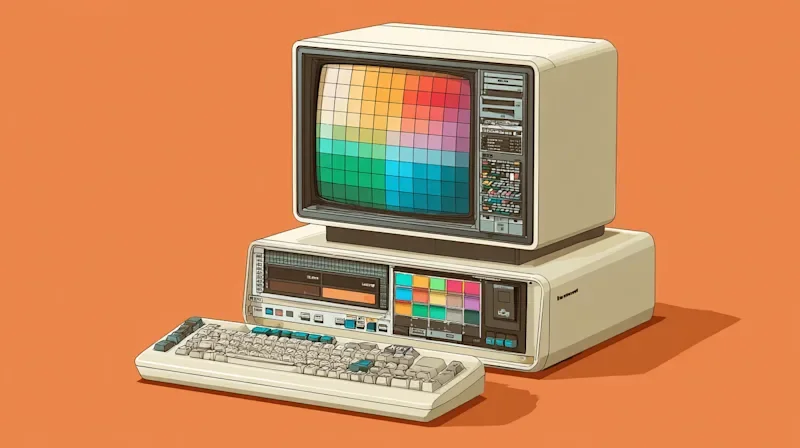
Claude Design launch coverage. Source: VentureBeat
Brilliant and Datadog Confirm the Speed Gains Are Real
Two early-adopter customer statements stand out for being specific, not promotional.
Brilliant (edtech) compared Claude Design head-to-head against other AI design tools:
"Recreating our most complex page required more than 20 prompts in other tools, but only 2 prompts in Claude Design."
— Olivia Xu, Senior Product Designer, Brilliant
Datadog (observability) described the workflow compression differently:
"A week-long cycle of brief, mockup, and review rounds collapsed into a single conversation."
— Aneesh Kethini, Product Manager, Datadog
These aren't demo-reel claims. They describe specific workflow transitions—multi-prompt reconstruction and multi-day review cycles—that translate directly into engineering velocity.
The Pricing Is Structured, Not Flat — And It Bites
If you remember one thing about Claude Design economics, make it this: Claude Design usage is metered separately from Claude chat and Claude Code, resets every 7 days, and is not pooled across team members (Claude Help Center).
The consequences were immediate. A PCWorld reviewer on the Pro plan ($20/month) reported burning 80% of the weekly cap in 30 minutes (PCWorld). A CopyRocket AI tester on the Max 5x plan ($100/month) hit 100% of the weekly limit in a 27-minute session (CopyRocket AI).
Real per-artifact overage costs reported from hands-on testing:
| Artifact | Overage Cost |
|---|---|
| High-fidelity landing page | ~$6 |
| Mobile app prototype (6 screens) | ~$2 |
| 20-second promo video | ~$4 |
| 10-slide presentation | ~$7 |
Source: Anthropic — Introducing Claude Opus 4.7
Practical implication: plan adoption in stages. Start on Pro for one seat, switch to Sonnet 4.6 as the default engine (Opus 4.7 only for final renders), and reserve heavy builds for Claude Code so you don't drain Design's weekly bucket.
The Competitive Matrix Isn't What You Think
Claude Design is not best-in-class at everything. It's best-in-class at a specific workflow slice.
| Capability | Claude Design | Figma AI | Canva AI 2.0 | v0 (Vercel) |
|---|---|---|---|---|
| Prompt-to-page generation | Strongest | Partial | Good | Strong (React) |
| Pixel-precise UI | Approximate | Strongest | Moderate | Strong |
| Real-time team co-editing | No | Yes | Yes | Partial |
| Design system management | Auto-learn | Full | Brand kit | Limited |
| Production code export | HTML/CSS/JS | Dev Mode React/Vue | Canva Code 2.0 | React/Next.js |
| Version history | No | Yes | Yes | Partial |
| Learning curve | Low | High | Low to medium | Medium |
Pick Claude Design for fast landing pages, pitch decks, or A/B variants from a brief. Pick Figma for production UI and long-lived design systems. Pick Canva AI 2.0 for high-volume branded marketing. Pick v0 for React/Next.js full-stack builds.
Enterprise Governance Isn't Ready
If you work in a regulated industry, Claude Design isn't ready for you yet—and Anthropic's documentation is honest about it. Enterprise access is disabled by default, there are no audit logs or per-user usage analytics, no public API ships at launch, and team sharing is limited to PDF, PPTX, HTML export, or read-only organization URLs.
Anthropic has committed to "expanding team collaboration features and external tool integration in the coming weeks." Until then, startups, agencies, and in-house marketing teams can adopt immediately, but finance, healthcare, and government buyers should wait.
The Real Bet Is Platform Lock-In
Claude Design isn't a standalone product. It's the visual layer of Anthropic's vertically integrated stack: Claude Code (coding agent), Claude Cowork (desktop knowledge-work agent), Claude in Chrome (browser agent), Skills/Marketplace (extensions), MCP (the emerging tool-connection standard), and Claude Design (visuals). Once your team onboards a design system, pipes outputs into Claude Code, and standardizes on MCP-connected tools, the switching cost rises fast.
Anthropic's commercial momentum suggests the bet is working: a Series G at a $30B valuation in February 2026, with 2026 revenue forecast raised 20% to $18B.
How to Actually Adopt Claude Design
A pragmatic, phased plan based on the reporting above:
Week 1-2 (Pilot): Subscribe to one Claude Pro seat ($20/mo). Upload your website URL, logo, and brand guide. Recreate three existing assets (pitch deck, landing page, SNS carousel) and measure time, quality, and cost.
Month 1-3 (Standardize): Upgrade marketing to Max 5x or Max 20x. Standardize a three-step pipeline: Claude Design → Canva (polish) → Claude Code (ship). Version-control the design system ZIP export.
Month 3-6 (Scale): Integrate with internal tooling once the public API ships. Lock in a hybrid stack — Claude Design for drafts, prototypes, and decks; Figma for production UI. Revisit Enterprise once audit logs ship.
Frequently Asked Questions
What is Claude Design?
Claude Design is Anthropic Labs' conversational design tool that turns natural-language prompts into landing pages, pitch decks, mobile prototypes, and marketing assets as live executable code. It launched April 17, 2026, runs on Claude Opus 4.7, and is available to Claude Pro, Max, Team, and Enterprise subscribers at claude.ai/design.
How does Claude Design compare to Figma?
Claude Design and Figma solve different problems. Claude Design wins at speed from brief to first draft—Brilliant replaced 20+ prompts in other tools with just 2 in Claude Design. Figma remains superior for pixel-precise production UI, real-time team co-editing, vector illustration, and long-term design system management. Use both: Claude Design for drafts and pitch decks, Figma for production UI.
How much does Claude Design cost?
The entry point is Claude Pro at $20/month, but pricing complexity is significant because Claude Design has a separate weekly usage cap that resets every 7 days and is not pooled across team members. Real-world tests show a Pro subscriber can burn 80% of the weekly limit in 30 minutes. Heavy users will need Max 5x ($100/month) or Max 20x ($200/month). Budget $500–$2,000/month for a 5-person marketing team depending on intensity.
Is Claude Design ready for enterprise use?
Not for regulated industries yet. At launch, Claude Design has no audit logs, no per-user usage analytics, no public API, and is disabled by default on Enterprise plans. Anthropic has committed to expanding team collaboration and integration features "in the coming weeks," but finance, healthcare, and government buyers should wait. Startups, agencies, and in-house marketing teams can adopt immediately.
The Bottom Line
Claude Design is a category-defining product, not a feature release. The Brilliant 20-to-2 prompt reduction and Datadog's week-to-single-conversation compression prove the speed gains are real. The 7% Figma stock drop proves the market believes the competitive threat is real. And the 80%-of-weekly-cap-in-30-minutes reviews prove the economics demand careful planning.
Treat Claude Design as a workflow redefinition, not a Figma replacement. Pilot on Pro for two weeks, standardize a three-stage pipeline with Canva and Claude Code, and keep Figma and Adobe for production and regulated work. The teams that win won't be the ones who adopt fastest — they'll be the ones who integrate it most intelligently.
Ready to test it? Start at claude.ai/design, upload your brand assets, and recreate one existing asset end-to-end. Measure the time, the quality, and the cost. That single benchmark will tell you more than any review—including this one.
For more AI trends and analysis, visit aboutcorelab.blogspot.com.